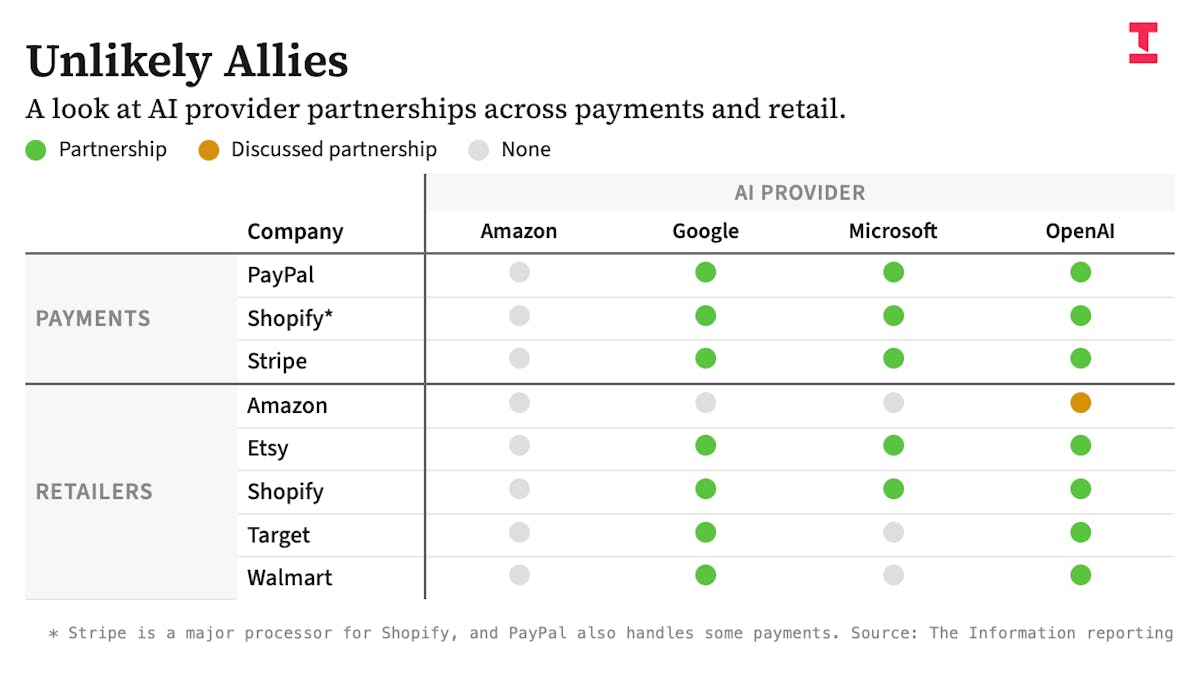
As the AI-driven e-commerce landscape intensifies, various rival companies are increasingly collaborating to challenge Amazon's supremacy. These partnerships aim to leverage combined technological expertise and market reach to create more competitive offerings for consumers.
In recent developments, several startups and established players have announced strategic alliances, focusing on integrating their AI capabilities to enhance personalized shopping experiences. This shift signifies a move away from cutthroat competition towards cooperative strategies that could reshape the industry dynamics.
One notable example involves a consortium of AI technology firms pooling their resources to develop advanced recommendation algorithms and smarter logistics solutions. These collaborations are designed to provide consumers with more tailored product suggestions, faster delivery times, and improved customer service, directly competing with Amazon's extensive ecosystem.
Furthermore, some companies are forming alliances to develop new retail platforms that utilize AI to optimize inventory management and pricing strategies. By working together, these firms aim to create a more level playing field and foster innovation that can rival Amazon's vast infrastructure.
Industry analysts suggest that such partnerships could accelerate the adoption of AI in e-commerce, leading to a more diversified market where consumers benefit from increased choices and better services. However, the move also raises questions about market consolidation and the potential for new monopolistic behaviors if these alliances become too dominant.
Overall, the trend of rival companies teaming up in the AI shopping sector marks a significant shift in strategy, emphasizing collaboration over competition as they seek to carve out a space in a rapidly evolving industry dominated by Amazon.